more muslim
more muslim is a narrative audio documentary series that explores the Muslim experience, with all its messiness.
Each episode is a narrative, transhistorical journey into one aspect of the Muslim experience that defined or is being defined by the modern world.
Season one ran from February to July 2026: ten episodes, hosted by Sohaira Siddiqui and powered by Al-Mujadilah Center and Mosque for Women, told through the lived experiences of Muslim women. I created the show and, across the season, edited, produced, and composed original music and sound design. The full season is at moremuslim.org.
The show began as an independent pilot in 2022 and 2023. Listen to the pilot episodes ->
01
Side Entrances
Editor/Composer
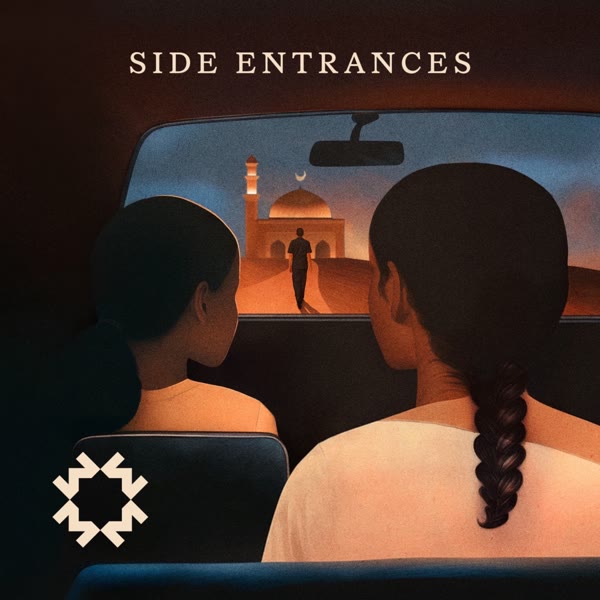
There’s a sentence many Muslim women grow up hearing. “It’s better for women to pray at home.” But what does it mean when the presence of half our community in the most central and sacred space of Muslim life is up for debate? Reporter Taqwa Sadiq traces the evolution of Muslim women's relationship with the mosque, from the prophetic era when women prayed alongside men without barriers, to today's reality where many mosques relegate women to basement closets, behind opaque partitions, or turn them away entirely.
02
The Nikkah Loophole
Producer/Editor/Composer/Sound Designer
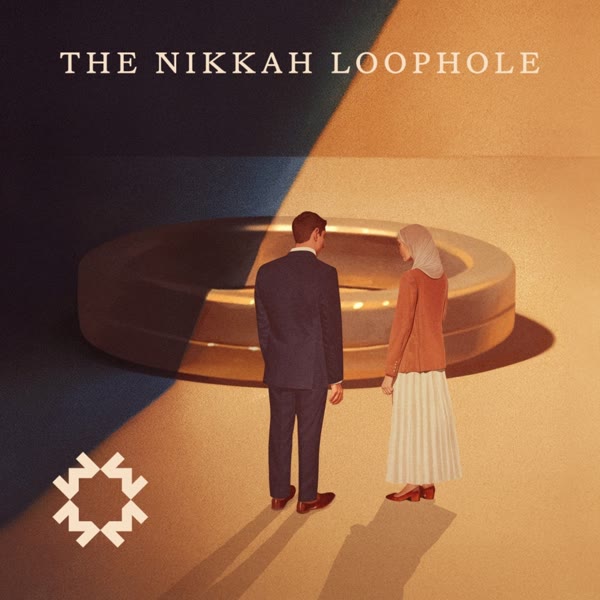
Reporter Tanita Rahmani realizes a small detail, blue ink instead of black on a marriage contract, means her marriage was never legally registered. That revelation sends her on a personal and investigative journey into the legal gray zone where many Muslim marriages exist: recognized by faith, but invisible to the law. From overlooked paperwork in New York to courtroom battles in the UK, this episode unpacks what happens when a nikkah isn’t enough, and asks: who decides if a marriage is a marriage?
03
The Secret Translators (with The Digital Sisterhood)
Editor/Sound Designer/Composer
The ‘Saheeh International’ translation is one of the most widely read English versions of the Qur’an. But unlike other famous translations like those by Yusuf Ali and Mohammed Abdel Saleem, the authors of the translation are rarely ever mentioned by name. Until one day, The Digital Sisterhood’s Cadar Mohamud hears a rumor about who actually wrote the mysterious translation: three white revert American women living in Saudi Arabia.
04
A Recitation Revolution
Editor/Additional Music
For most of her life, Maryam believed women couldn’t recite the Qur’an aloud. That a woman’s voice, especially while reciting the Qur’an, is awrah. Something to be hidden. Then, one day in high school, she heard a girl recite in public. Reporter Nadeen Shaker shares the story of Maryam Amir, one woman’s journey to revive her relationship with Islam through the Qur’an. And how it sparked a recitation revolution.
05
Hanabneehu: Rebuilding Sudan, One Class at a Time
Executive Producer
When war broke out in Sudan in April 2023, Dr. Fairouz El Hijzi had to flee her home with her family. Two months later, as a hastily-appointed interim dean of architecture, she faced an impossible choice: give up on her students' futures or attempt to resume classes in the middle of the worst humanitarian crisis in modern history. This is the story of what happened when she and her students decided to keep hope alive and build a new future for Sudan in the midst of the destruction all around them.
06
Cape Malay: The Indonesian Roots of South African Islam
Producer/Composer/Sound Designer
Growing up, Aina had heard about the transatlantic slave trade that enslaved Africans and took them to the Americas. But on one of her reporting trips, she was shocked to learn that, around the same time, Dutch colonizers were deporting and enslaving Muslims from Indonesia and shipping them thousands of miles... all the way to South Africa.
This week, reporter Aina J. Khan takes us to Cape Town and tells the story of the Cape Malay, South Africa's oldest Muslim community. How they used their faith to survive through 400 years of slavery, colonialism, and apartheid. And why, today, they might be facing their most existential threat yet: gentrification.
07
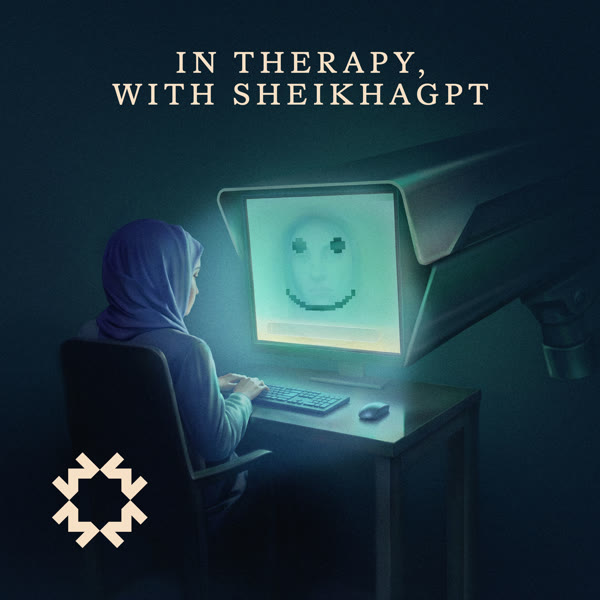
In Therapy, With SheikhaGPT
Editor/Composer
When reporter Yassmin Abdel-Magied's friend tells her she's been using ChatGPT as a therapist, Yassmin doesn't know what to think. The chatbot calls her friend "habibti." Gives her Islamic relationship advice. It's helping her reconnect with her faith in ways no human in her life has been able to. But it's also a product built by a tech company with no foundations in Islamic psychology.
This week on the show, Reporter Yassmin Abdel-Magied goes down a rabbit hole to try and understand Islam's relationship to mental health and whether AI can ever truly heal us. And she finds a Stanford professor asking herself the same questions.
08
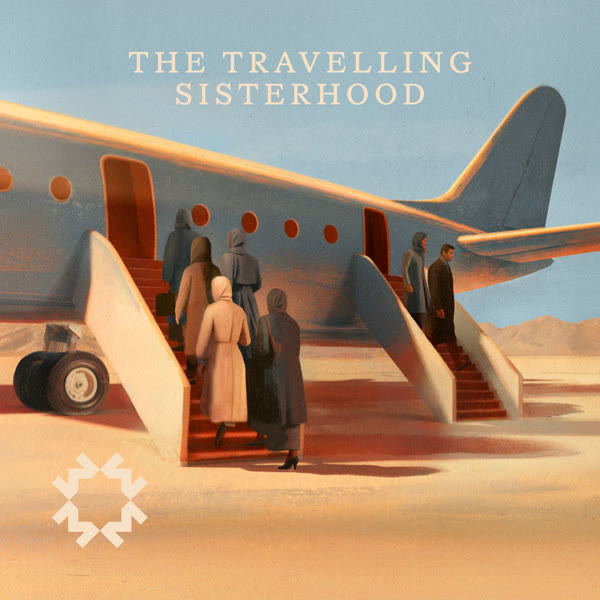
The Travelling Sisterhood
Editor
As millions of Muslims complete Hajj this week, we revisit a question scholars have debated for centuries: can a Muslim woman make a journey like that without a mahram?
This week on the show, host Sohaira Siddiqui recalls the first time she ran headfirst into that debate, when she decided to tell her parents she wanted to move to Jordan to study Arabic. And how that initial conversation at her parents' kitchen table led her to dive deep into centuries of scholarly debate on the topic, from the Mughal princess Gulbadan Begum's seven-year pilgrimage to Mecca, to the 2023 Saudi ruling that let women perform Hajj without a male guardian.
Years later, in post-Arab Spring Egypt, a young woman in the middle of a spiritual crisis feels the same pull to leave, and signs up for a women's retreat in Morocco, hoping a group of new Muslims might help her find her way back to a faith she's losing her grip on.
09
A More Muslim Japan
Story Editor/Composer
The number of Muslims in Japan has almost quadrupled in the last two decades. Migrants are coming in ever greater numbers to work there from countries like Indonesia. And yet, Islam is still seen as this... foreign, elusive thing.
This week on the show, reporter Tanita Rahmani follows two Muslim women who try to change things. And begin the long journey towards normalizing their faith and the slow making of a more Muslim Japan.
All through a unique, and universal, lens: food.
10
The Women Who Wash Our Dead
Editor/Composer/Sound Designer
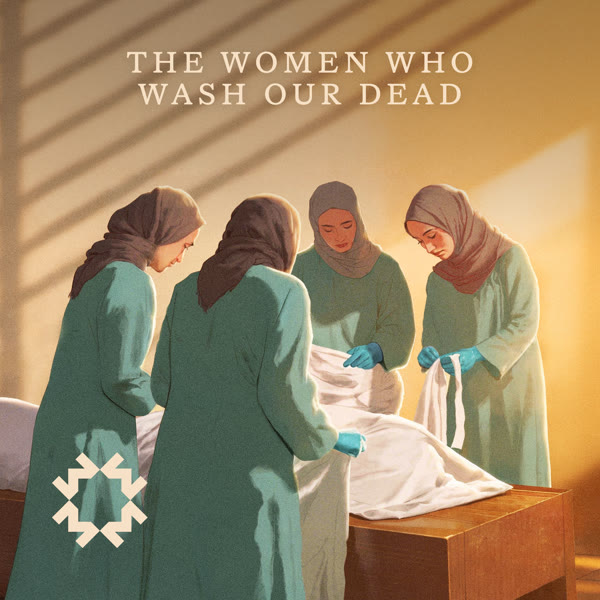
Reporter Rowaida Abdelaziz was 21 the first time she watched a body lowered into a grave. Her cousin, a young mother, died just days before her 33rd birthday. No one knew what to do in that moment of unthinkable grief. All they knew was that someone had to make the arrangements. That's when a woman named Howaida stepped in.
This week on the show, reporter Rowaida Abdelaziz travels across New Jersey and Cairo looking for the women who carry out one of the most intimate obligations in Islam: washing the bodies of our dead. What does it take to intertwine your life with death and grief, and run to the aid of people on the worst day of their lives?